AI makes us dumber, right? Headlines have inflamed fears that using AI will result in skill loss. Studies published last year did find associations between diminished critical thinking and AI use, the most cited of them being in Societies. A study from Microsoft Research and Carnegie Mellon found that knowledge workers with higher confidence in AI showed less critical thinking while knowledge workers who had higher confidence in their own abilities showed more. It does seem like there’s something to be concerned about. What do we do with this concern, and how does that impact our individual choices? Unfortunately, the headlines distort what’s going on.
Choosing to avoid AI for fear of losing skills puts ineffectual onus on the individual and may be making smartly concerned people ill-equipped to play a meaningful role in shaping where this technology is going.
Fifty-Two Years of Calculator Dread
What does the current concern look like when we consider historical examples of how technology has and hasn’t changed our skills?
Reading and facial recognition. Learning to read directly impinges on brain regions for recognizing faces. Literate people recognize faces with a different distribution of brain parts than illiterate people. This is the opening anecdote in Joseph Henrich’s book The WEIRDest People in the World, which discusses how much of our social science is skewed and likely inaccurate because it makes general claims about humanity based on studies of people in the narrow demographics available to scientists. In this case, our technology of writing changes our bodies and how we literally see each other.
Standardized clock time. Broadly accessible clock time, which spread in different places from the mid to late 1800s, synced people up with each other in an entirely measured and mechanized way. This was a dramatic change from our previous shared notion of time, which had grounding in the rhythm of light in a day and the effect of seasons through a year. Considering this massive shift, I try to imagine what my great-great-grandparents, all sixteen of them across different places, did to decide when to do what, for how long, and how to coordinate with others when clocks were much rarer. What were they good at that we can’t even remember was worth having as a skill? I have a hard time viscerally remembering what it was like to coordinate with people before text messages, and that change happened in my lifetime. (Read Venkatesh Rao’s essay “Getting Gooier” to run with a related thought experiment.)
Calculators in schools. A 1974 recommendation from the National Council of Teachers of Mathematics to include calculators in math education brought on a barrage of skepticism, precipitating numerous studies on their impact. In 1986, a meta-analysis of 79 studies said, “In Grades K-12 (except Grade 4), students who use calculators in concert with traditional instruction maintain their paper-and-pencil skills without apparent harm. Indeed, a use of calculators can improve the average student’s basic skills with paper and pencil, both in basic operations and in problem solving.” (Hembree & Dessart, JRME, 1986.) A later meta-analysis of 54 studies in 2003 came to similar conclusions, that calculator use did not hinder the development of mathematical skills. (Ellington, JRME, 2003.) Calculators actually improved student attitudes towards math and boosted their confidence. Despite these findings, there’s been sustained resistance to introducing calculators into math education, with state legislation proposed to ban calculators in grades K-8 as recently as this year.
Autopilot in flight. Automated flight management systems on commercial flights became widespread in the 1980s. Pilots’ skills with manual flight atrophied, resulting in tragic crashes including Air France 447 in 2009, which killed everyone on board. The crashes were horrific and rightfully inspired meaningful interventions to maintain skills. But the skill loss in individual crash situations looks different when considered in the larger context of overall flight safety. Death risk per flight taken was at 1 per 750 thousand between 1978 and 1987 and had dropped to 1 per 13.7 million by 2022. (Barnett, 2024.) Flight automation can only be a part of that story, but shifting the concern from “individual pilot skills” to “air travel safety” changes the weight of the de-skilling.
At a recent conference I attended, the room was given an icebreaker question: would you rather pay 75% less for a transcontinental flight piloted only by AI or pay full price for a manual flight piloted by a human? The room split at 75% wanting the cheap autopilot and 25% choosing the human pilot.
Thinking through these diverse examples puts the panic over skill loss through AI into question. Our skills change in unanticipated ways through use of technology. Some of the things we worry most about don’t actually matter much at all. What skills matter and why also changes on macro levels. “Use it or lose it” is a comfortable aphorism that may be leading us astray.
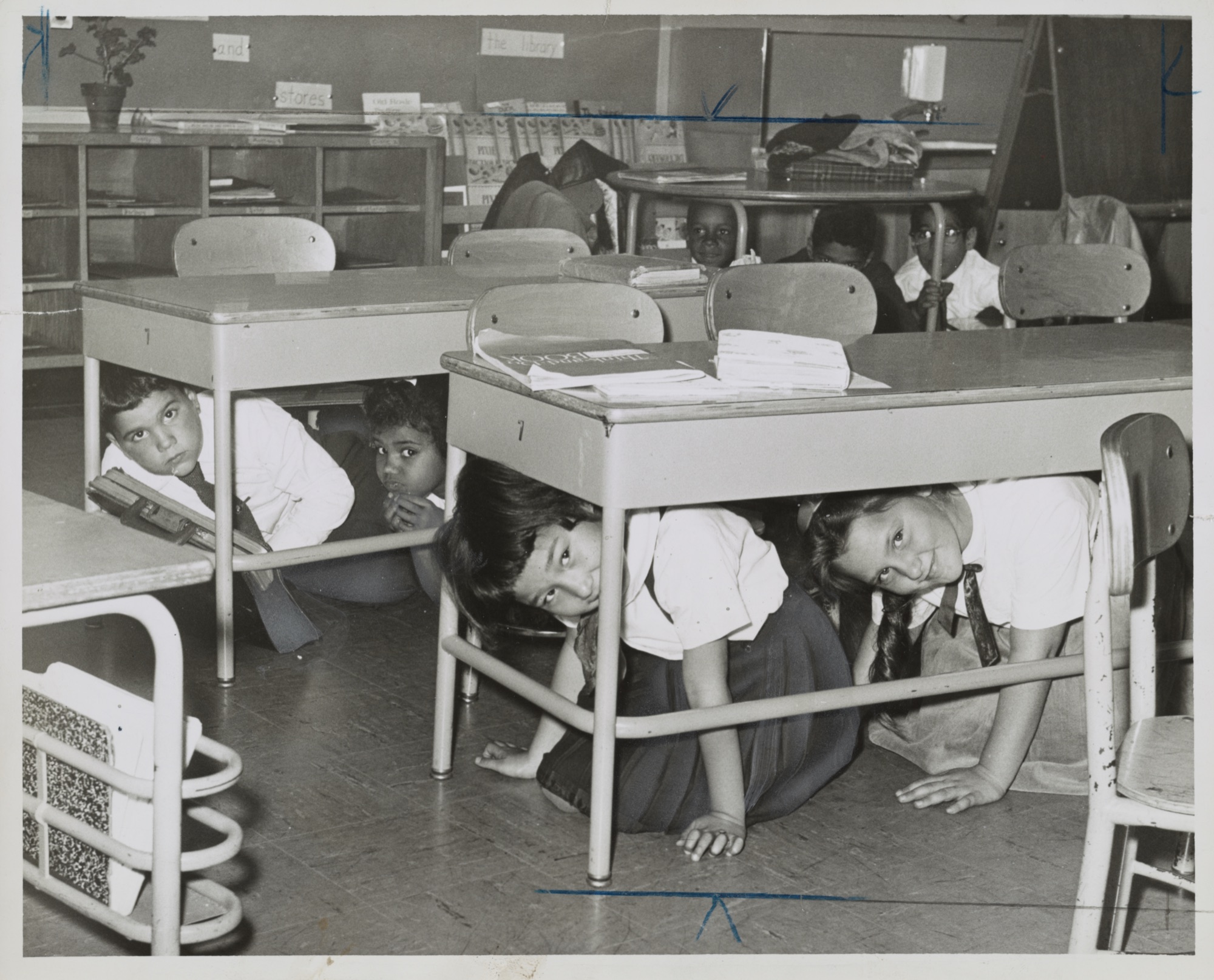
Duck and Cover from AI
Study results correlating AI use with diminished critical thinking seemed unsurprising to me. In the same sense that you shouldn’t believe everything you see on television, and that social media creates a reality distortion field, AI holds similar hazards to other media and technology. What did surprise me was the panic over the results. Looking closer at these studies, I was frustrated. The reactions didn’t match what the studies actually showed, or even what the researchers believed or cared about.
The most cited study, in Societies by Dr. Michael Gerlich, is based on a questionnaire of 23 mostly agree/disagree items that asks about use of AI tools, defining them as “everything from virtual assistants and recommendation algorithms to complex decision-support systems.” Answers from over 650 adults in the UK, with added context from 50 interviews, were analyzed. The results showed such tool use is strongly associated with cognitive offloading and lower critical thinking. This is meaningful. We can’t delude ourselves into thinking that using these tools in default ways will have good effects on us. A later study from Microsoft Research and Carnegie Mellon supported Dr. Gerlich’s findings. Both studies showed a clear correlation but did not go so far as to suggest that AI is inherently bad for cognition and reasoning.
Dr. Gerlich himself is a self-described member of the Trekkie generation who loves technology, enthusiastically trying out new tools. He’s upset with how his study was received. At an industry discussion, he said, “I am very unhappy because it didn’t come out clearly that how we use the AI impacts the critical thinking, not generative AI generally.” He cites dramatic headlines on his work reading, “How AI Can Damage Your Brain,” which isn’t what the study suggested or talked about at all. The study results and the ensuing press spin fail to convince me that general abstinence from using AI is an informed approach. And yet this is what I see concerned people doing. What does make sense to me is that things are changing, lots of us are freaked out about it, and we don’t know what to do.
As researchers studying calculators in classrooms concluded, “It no longer seems a question of whether calculators should be used along with basic skills instruction, but how.”
The Skills Our Great-Great-Grandchildren Won’t Know We Had
Will using AI fundamentally change our brains as reading does, recalibrating the way we manage a seemingly unrelated skill?
Will it foundationally change our relationship to ourselves and each other such that our descendants can’t conceive of the nuanced skills we take for granted today, as is the case with shared clock time?
Will it continue to create anxiety about its use in education regardless of what the evidence shows, like calculators in math classes?
Will it play a role in making currently novel and risky activities safely available for the masses, forcing new ways to train skilled workers for those edge cases where emergencies break the bounds of normal operation, like autopilot in commercial flight?
Making predictions about this stuff is hard. The historical examples have me questioning the individual choice to abstain from experimenting with a technology for fear of skill loss. It’s not clear to me that this will meaningfully preserve individual skills, especially when that choice is driven by anxiety, uncertainty, and a misreading of the research.
We change even when we don’t expect to. We don’t change despite being gripped by fear that we will.